160x Faster: How AI Transformed Medical Record Processing at Liner Legal

-
Client name
Liner Legal
-
Industry
Legal
(Disability Law) -
Location
USA
-
Size
50+ employees
-
Duration
1,5+ years (ongoing)
Challenges
Liner Legal processes hundreds of disability cases at once. Manual workflows had become the bottleneck to growth.

Processing Medical Records
A single client's medical history can run anywhere from a few hundred to ten thousand pages. One PDF might contain scanned prescriptions, handwritten doctor's notes, lab results, imaging, receipts, and administrative paperwork. One client could take over a week.
Working With the Government Portal
SSA has no public API, so the only way to check hearing information is manually through the web interface. Every day, someone on the team would log into the portal, look for updates, copy the data, and add it to the right attorney's calendar.
Syncing Between CRMs
The company uses two systems to manage cases. Data is entered manually, so discrepancies pop up all the time: names spelled differently, duplicate records, missed updates. Every month, one team member would spend up to four days reconciling entries and fixing errors.
Solution
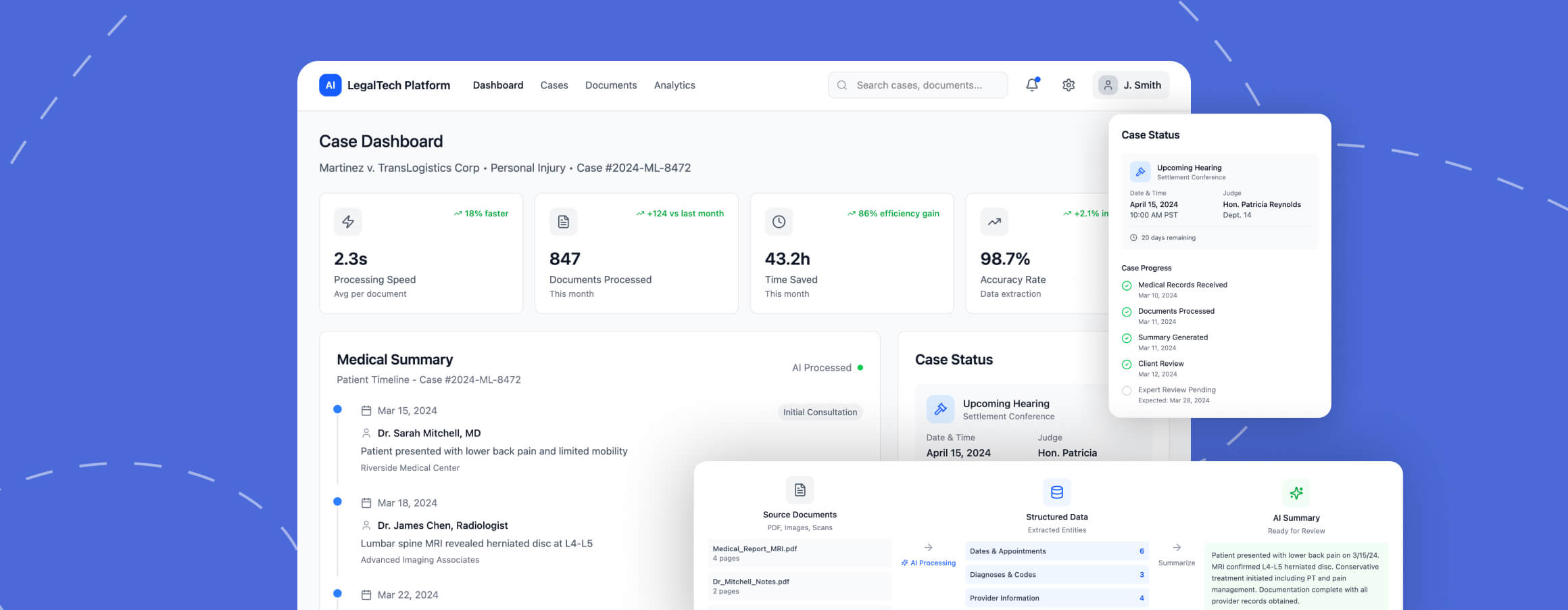
The project started with a very specific pain point: the need to work with medical documentation quickly and accurately. The first request was to build a tool that would automatically generate a Medical Summary for each case.

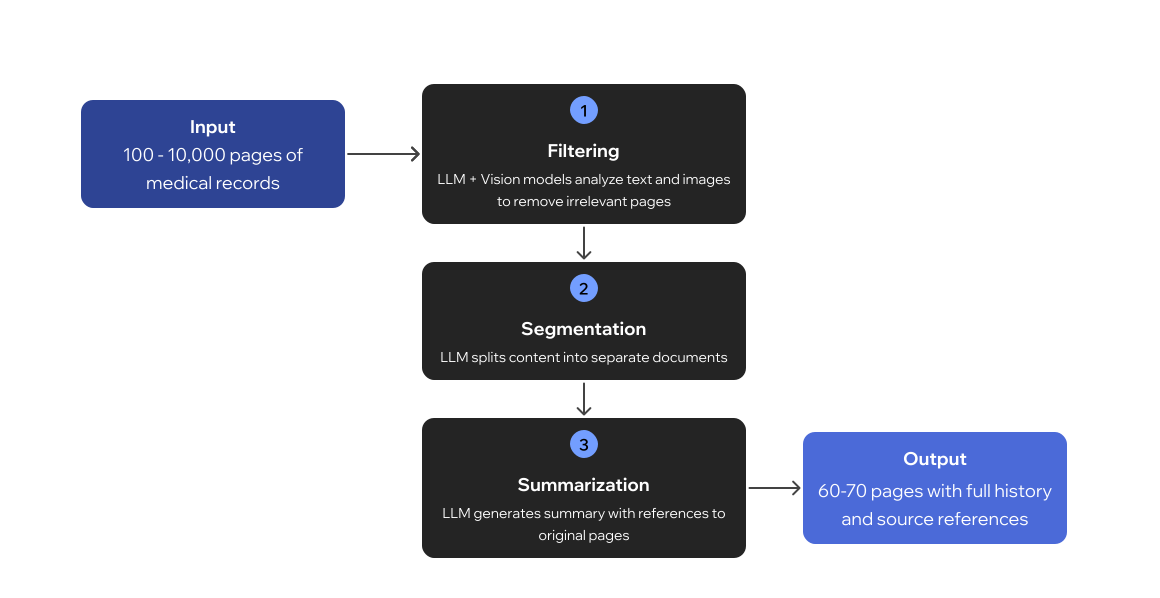
We built a multi-stage system that processes medical documents. It filters out irrelevant pages, splits large PDFs into logical blocks, and summarizes each with dates, doctor names, and facilities.
We worked with different types of content, including handwritten doctor's notes and scanned images, so we used both text-based language models and vision models for visual content.
One important detail! Every item in the final report links to the specific page in the original document. The attorney can click through to the source and verify the information instantly.
The results were so noticeable that the client started coming to us with new ideas. New modules weren't experiments with AI. They were answers to specific business problems.
We built a system that automatically tracks changes in the Social Security Administration government portal. The platform regularly checks case statuses, hearing dates, and assigned judges, then:
- Updates the CRM,
- creates events in attorney calendars,
- sends notifications to clients.
The next task was integrating with the SSA government portal. The problem is that the portal has no public API. The only way to get information about scheduled hearings is to log in through a browser and look it up manually.
We built a Selenium-based scraper that emulates a real user: opens a browser, authenticates, and downloads the data. To handle two-factor authentication, we set up a dedicated mailbox via AWS SES that intercepts codes from the portal automatically.
Before a hearing, the team needs to see the full picture: when the client visited which doctors, whether there are gaps in the history, and where they need to request additional documents.
The system analyzes medical records, extracts provider names and visit dates, then automatically fills in the corresponding fields in Filevine CRM. If there are periods with no data, the system flags them.
When a case closes, the firm needs to calculate how much time was spent working with the client. Previously this was done manually by going through tasks and comments in the CRM.
Now the system automatically collects all tasks related to the case, analyzes who worked on what and how long it likely took, and generates a structured description of the work performed for billing.
Not every client fits the firm's specialty. AI analyzes medical records and classifies the case by category. If the case doesn't fit, the system suggests which partner to refer it to. The client can add new categories on their own without involving developers.
The project handles highly sensitive medical and legal data, so security was a top priority. We implemented:
- Updates the CRM,
- creates events in attorney calendars,
- sends notifications to clients.
Many of the client's external systems had no API, so we developed our own scraper and RPA layer that securely interacts with government portals and third-party services, mimicking human behavior but with machine-level precision.
As we scaled the platform, we also solved server performance issues, optimized processing of large PDF files, and built reliable cloud infrastructure for uninterrupted operation.
Services
-

AI/ML development
-

Business process automation
-

Third-party integrations
-

Web development
-

Mobile development
Your Strength in Agentic AI
Most of the value we see from AI right now sits in operational work. The cost of doing it manually is being paid today, in hours and missed opportunities.

Dedicated Team
-
2
Web Developers
-
1
AI/ML engineer
-
1
QA specialis
-
1
PM
Tech Stack

Java

Kotlin

SpringBoot

Vaadin

Python

LangGraph

OpenAI API

Filevine API

Hona API

Selenium

SendGrid

Google Calendar
Java
Kotlin
SpringBoot
Vaadin
Python
LangGraph
OpenAI API
Filevine API
Hona API
Selenium
SendGrid
Google Calendar
Client Feedback

“What I like most about Anadea is that they've truly become part of our team. They're incredibly detail-oriented, proactive in suggesting improvements, and consistently bring new ideas to improve our systems.

Business Value
We've significantly expanded the scope of work initially defined. That trust means a lot to us. And over this time, working together as a team, we've achieved the following:

Faster Medical Record Processing
Before, working on a single case looked like this: an attorney would receive a PDF with hundreds or thousands of pages and manually review the medical records. Now the system handles that part automatically. As a result, the attorney works with around 60 pages and can see the full case history right away.
Automated CRM Data Reconciliation
The company uses two CRM systems, and the data between them would regularly fall out of sync. Once a month, someone had to manually compare spreadsheets. This process took at least four days of expensive time spent on busywork. We set up automatic syncing between the systems, so now the need to fix discrepancies simply doesn't come up.
Same Team, More Clients
When the team spends less time on routine work, they can take on more clients. The company grows, but the headcount stays the same.
Ahead While Others Catch Up
The legal business in the US is conservative. Most firms still operate the same way they did twenty years ago. Our client bet on technology before the rest. While competitors are hiring people to keep up with their caseload, he's scaling through automation.
Rejected Cases to Referral Fees
AI analyzes the medical records and automatically determines what category a case falls into. If it's outside the firm's focus, the system suggests which partner to refer it to. For each referral, the company earns a commission.
AI Built for Regulated Industries


Other Projects
Web Platform for LegalTech
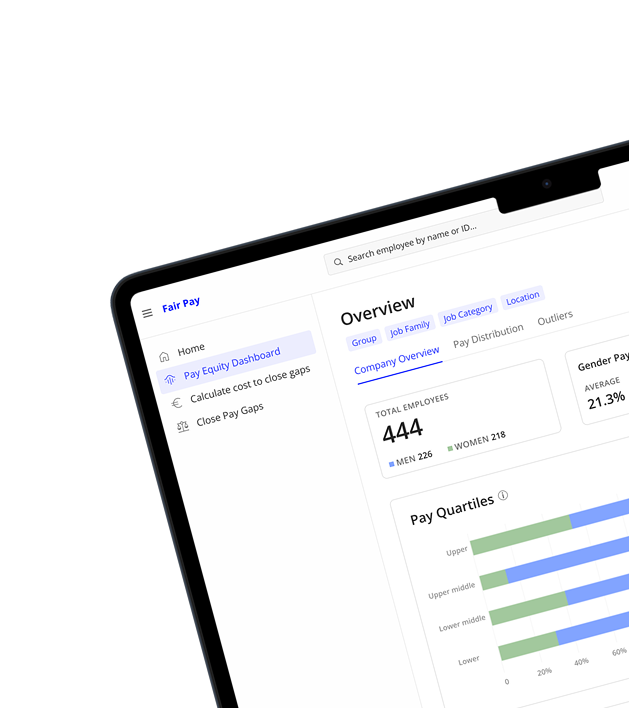
We turned a complex R-based salary equity model into a secure web platform in under 4 months. The MVP helped the client enter the market first, win trust from enterprise clients, and launch active sales across the EU.
Agentic AI Platform for Trading
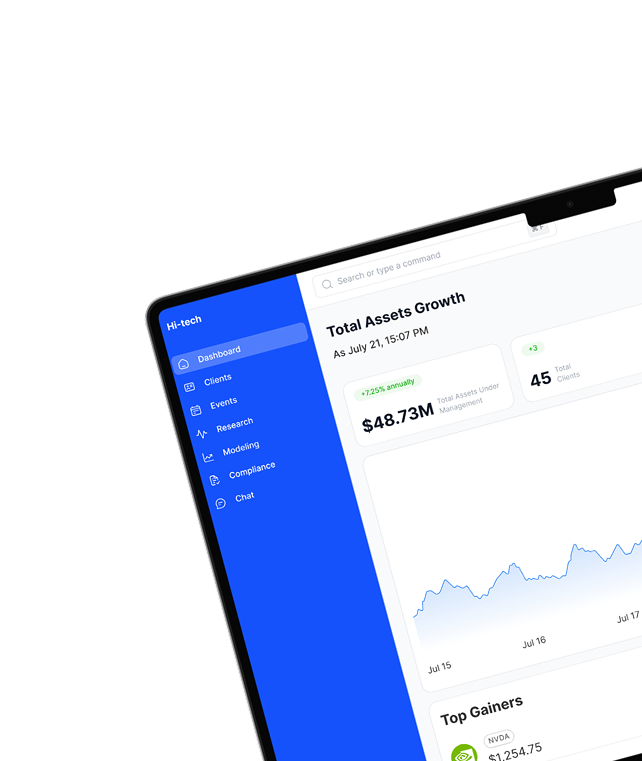
We developed an AI-driven trading platform that combines analytics and intelligent recommendations for investors. By moving to a microservices architecture with Redis caching and AWS SQS, we increased performance by 40%.

Contact us
Let's explore how our expertise can help you achieve your goals! Drop us a line, and we'll get back to you shortly.